

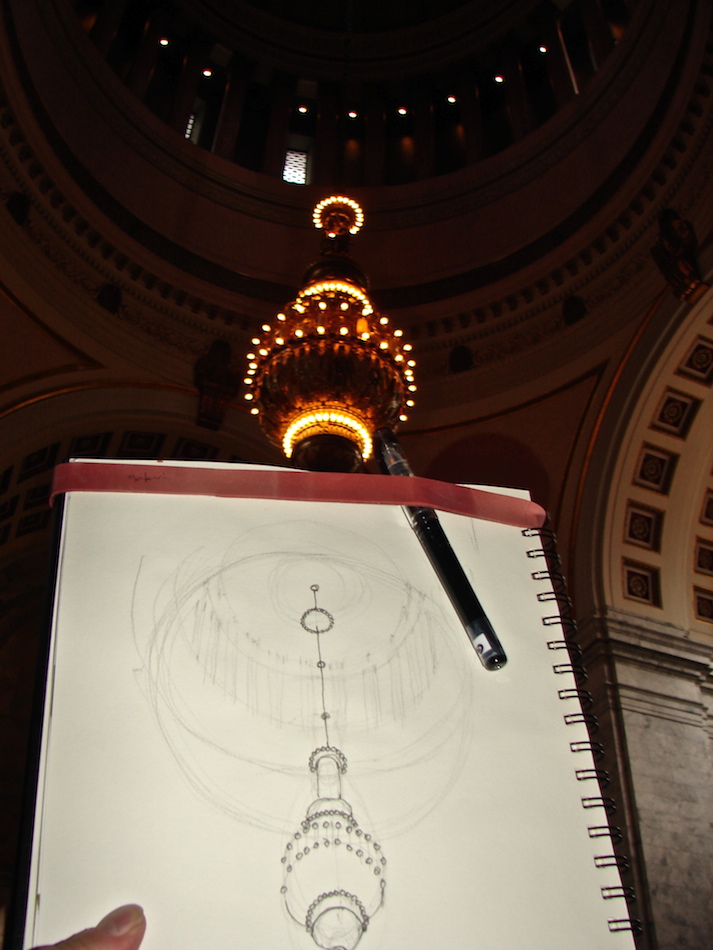
 This week at the Washington State Legislative
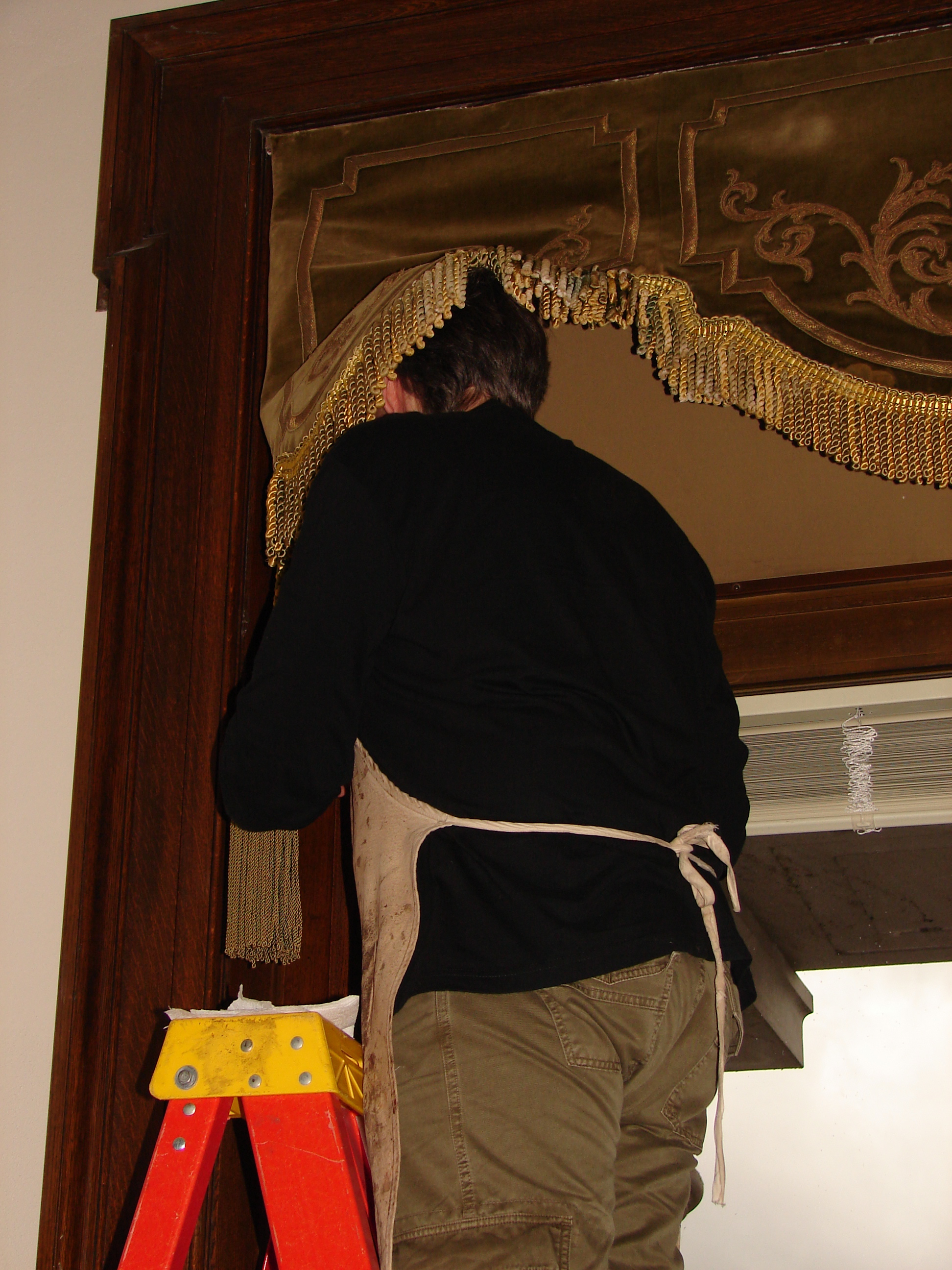
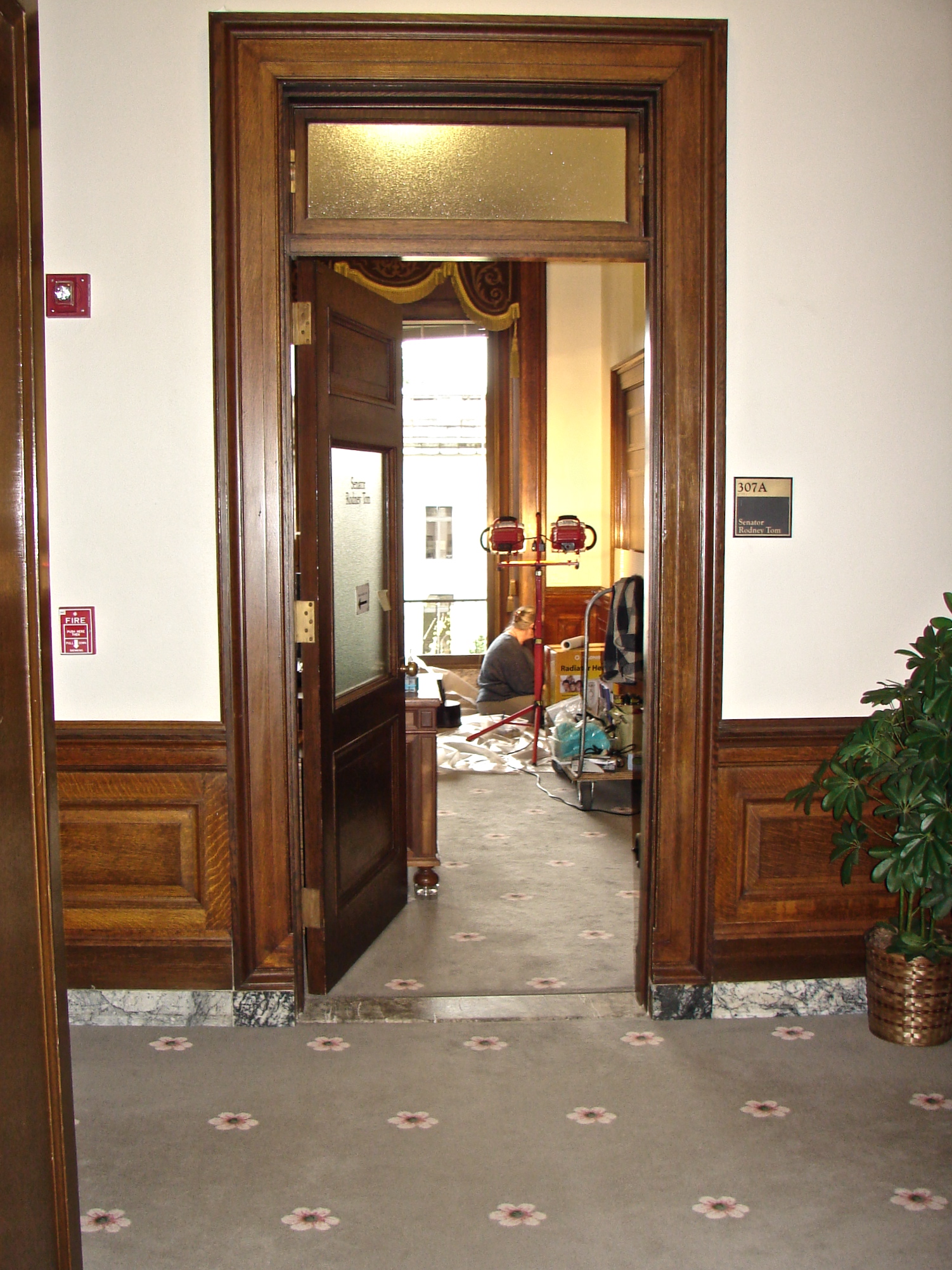
Building I had a good deal of free time, as it was Mitchell doing the lion’s share of the work on the Senator’s offices. In the middle of a dark downpour, (the building was dark inside) I sketched all over the building.
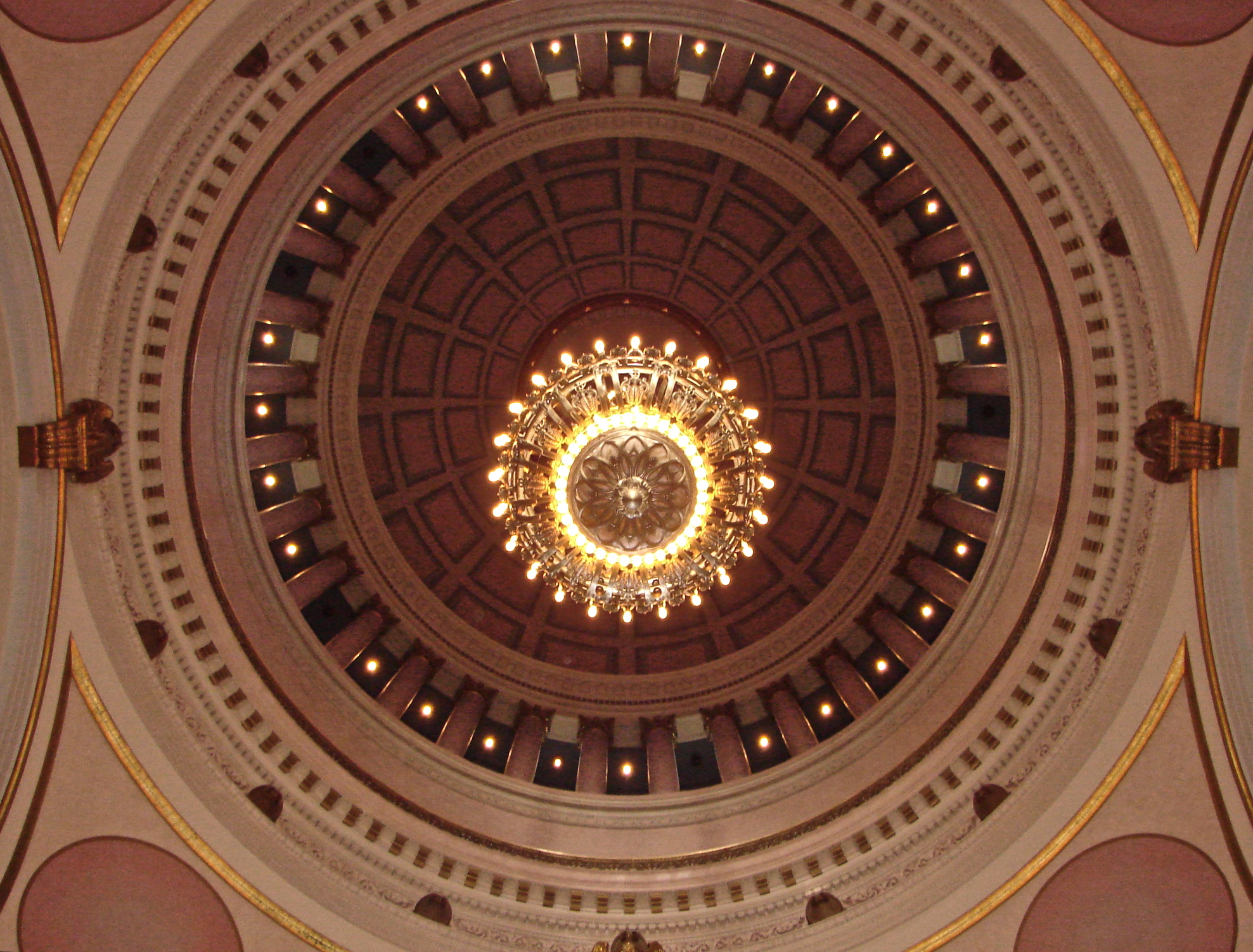
I started in the Rotunda, with the beautiful dome overhead and the Tiffany chandelier, because it thoroughly intimidated me. I figured if I was able to do even a halfway decent drawing, I could do anything! The steps were cold, and people came to look over my shoulder and talk to me, more than normal.
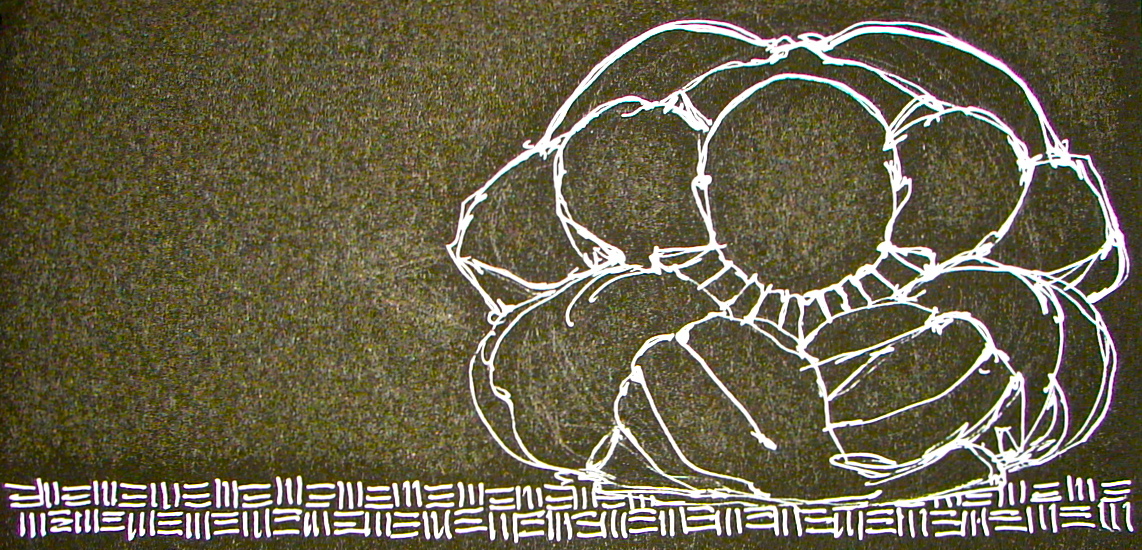
I began by understanding the geometry of what I was drawing, which I think is even more important in symmetrical buildings. If a building is wonky to begin with, then your mistakes may not be noticeable. But with formal symmetry, if things are off they jump out at you. I did a pencil sketch roughly like the drawing below (the underlines were eventually erased), understanding that the dome was going to be a series of stacking circles along the center line of the drop of the chandelier, except many would be cut off from view. There were several other circles stacking on the center line which correlated to the circular balcony at the top of the dome (I MUST find a way to get up there sometime). As we reached the area where the cruciform plan of the rotunda reached out under arches in four directions, I would let the drawing go, so as not to make it too complicated.
Even with all the planning, I lost about three feet in the dome structure. Next time!
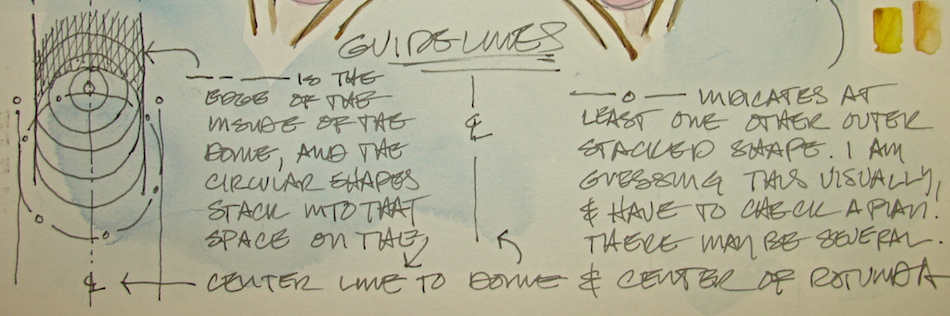
After the geometric guidelines, I began inking in stages, building definition and detail.
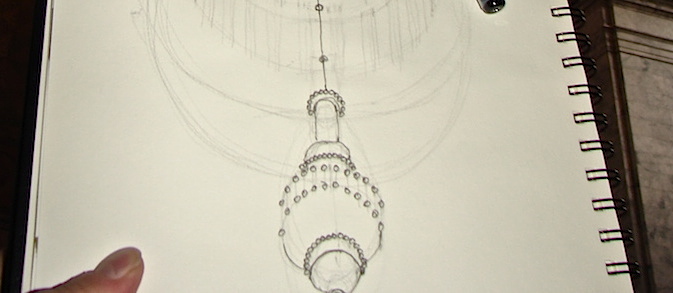


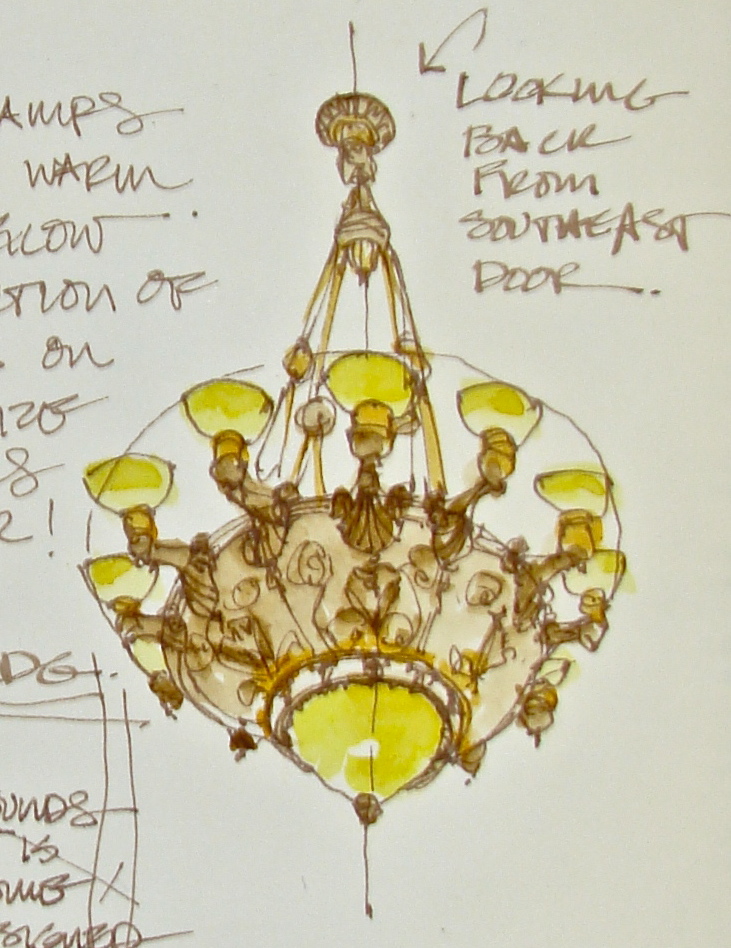
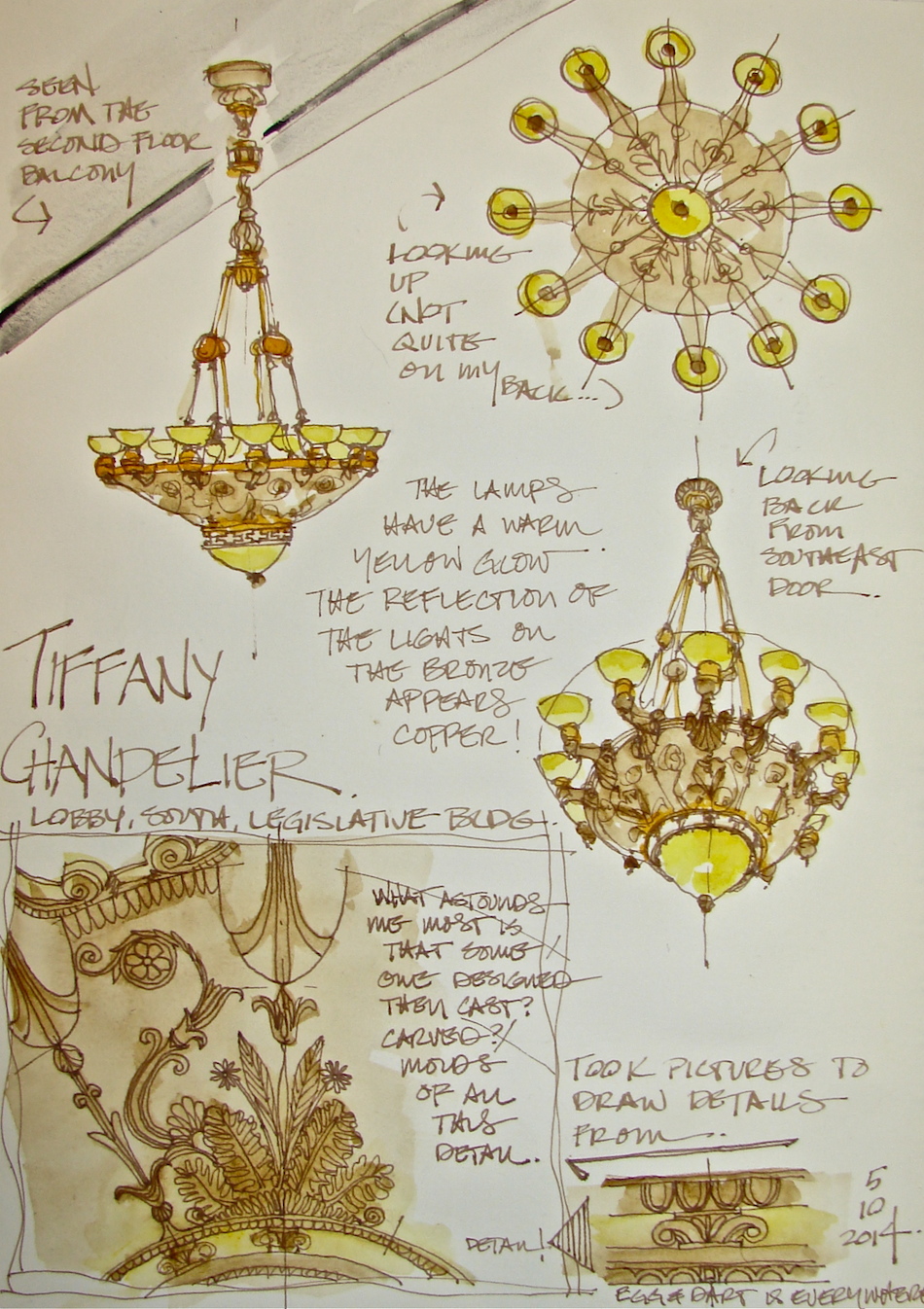
The chandelier was made by Tiffany Studios in NYC, of bronze and bulbs, highly detailed and elegant, stately but certainly not glitzy like the crystal chandeliers nearby. It cost one dollar per pound (what an odd way to charge) and so was $10,000. The body of the chandelier is twenty-five feet tall, eight feet wide, and hangs on a hundred foot chain. 204 bulbs circle top, middle and bottom, with an added matching lamp in the dome.
 Watercolors were added in the studio.
Drawn in an Stillman & Birn Delta journal with a Noodlers giveaway pen,
Lexington Grey ink, and Daniel Smith (quin gold, Indian yellow, tigereye, indigo), Sennelier (quin red, raw umber, phthalo blue 807, Chinese white),
and QoR (bohemian green) watercolors.

I agree to Creative Commons Attribution-Non-Commercial 4.0 International License, which you can learn more about by visiting the site, or,
visit my web page for a more user-friendly summary on my terms.
My images/blog posts may be reposted; please link back to dkatiepowellart.











 You know you have a pretty cool job when your boss offers you a ten week tour around South America and sketch inspiration for your next cartoon as you visit beautiful beaches, exotic cultures and remote landscapes. In 1941, before America entered the war, Walt Disney took a group of sixteen of his best animators and composers to Brazil, Argentina, Chile and Peru, as part of a goodwill tour commissioned by the United States Department of State. As well as exercising the Good Neighbour Policy, the trip was intended to lead to a new animated movie that could be shown in Central and South America to celebrate (and secure) their friendly relationship. The film would be called, Saludos Amigos.























 D.Katie Powell Art